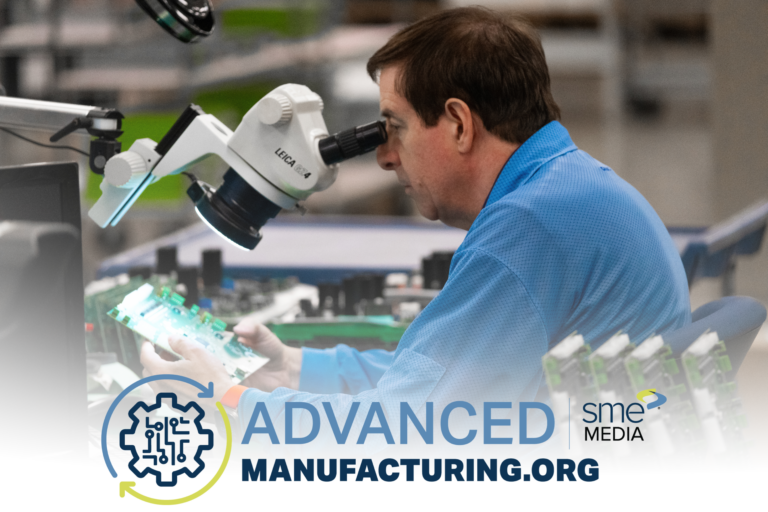
For more than 40 years, VR Industries has built a reputation as a trusted electronic contract manufacturer in Rhode Island. SME Media recently spotlighted the Warwick-based company in its States of the Industry series, recognizing how VR Industries has grown into a regional leader in printed circuit board assembly and full electromechanical integration.
The feature, titled “Doing Something Right in Rhode Island Contract Manufacturing,” highlights what longevity in electronic manufacturing actually requires. According to data cited in the article, fewer than a third of manufacturing companies operate for a decade, and only 25% are still running after 15 years. VR Industries is heading into its fifth decade.
Beating the Odds in Electronic Contract Manufacturing
VR Industries traces its roots to 1985, when the company relocated from Long Island, New York to Warwick, Rhode Island. Originally known as Vanguard Relay, the business pivoted as the demand for mechanical relays declined and the world moved toward printed circuit board assembly. That early willingness to adapt set the foundation for what the company has become, a second-generation, family-owned electronic contract manufacturer serving customers across renewables, medical, defense, industrial systems, robotics, and the blue economy.
Nathaniel Rippin, director of marketing and growth at VR Industries, captured the sentiment in the SME interview. “Being around for 40-plus years means you’re doing something right,” Rippin said. “People seek us out. We’ve made a good name for ourselves.”
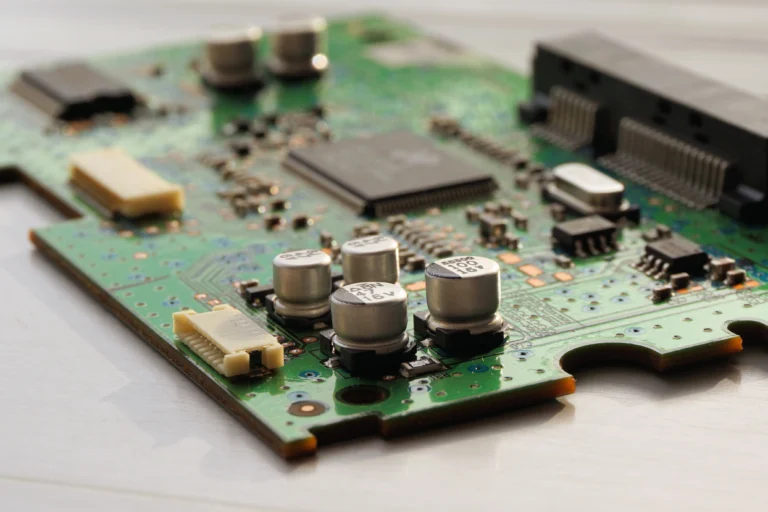
Today, Printed Circuit Board Assemblies (PCBA) and circuit card assemblies make up nearly half of company revenue. The remainder comes from higher-level work, including subassemblies and full box builds with metals, cables, and plastics. It is a true turnkey process built around the customer’s documentation and design intent.
What Sets a Rhode Island Contract Manufacturer Apart
A diverse customer base is one of the practical advantages of partnering with an electronic contract manufacturer. VR Industries supports OEMs across multiple regulated, high-reliability industries without losing the agility that smaller, family-run operations are known for. The team typically runs between 40 and 50 employees out of a 35,000-square-foot facility, large enough to handle complex programs and small enough to know every customer by name.
Capabilities span the full production lifecycle and include the following.
- Printed circuit board assembly and circuit card assembly for moderate to complex programs
- Electromechanical integration for full system builds with cables, enclosures, and mechanical hardware
- Design for Manufacturing (DFM) feedback during early-stage development
- Supply chain resilience and component sourcing for long production cycles
- Material traceability, including code tracing, aligned to industry standards
Customers across patient monitoring, medication delivery, process automation, and defense applications rely on VR Industries’ adherence to ISO 9001:2015, ISO 13485:2016, ITAR, FDA, and J-STD-001 Space Addendum standards. The company tests to spec and supports its customers through the documentation, inspection, and verification their programs require.
The Customer Innovation Center Advantage
One element of the SME feature that resonates with new and returning customers is the Customer Innovation Center. Startups and established OEMs are invited to meet with VR engineers, walk through the manufacturing process, and refine their design before it ever reaches the production floor.
“We’ll walk through the manufacturing process with them, provide design for manufacturing (DFM) feedback, update processes collaboratively, and make sure all the kinks are worked out before transitioning the program to the manufacturing floor,” Rippin explained in the article. “It often speeds up the time to market and helps to mitigate future problems.”
Customers who engage early through the Customer Innovation Center see practical, measurable benefits.
- Faster time-to-market through earlier identification of manufacturability issues
- Lower total program cost from fewer late-stage redesigns
- Stronger collaboration between engineering, supply chain, and production teams
This kind of early-stage engagement is what differentiates VR Industries from purely transactional electronic contract manufacturers.
A Tight-Knit Manufacturing Community in the Ocean State
Rhode Island manufacturing accounts for 7% of the state’s GDP and 9.1% of its workforce, supported by 1,189 manufacturers operating across the smallest state in the country, according to the SME feature. That density creates a community where partnerships matter and reputation travels fast.
“Everyone talks to one another, and everyone knows one another,” Rippin shared. “You pick up the phone, people answer, and we get stuff done. Manufacturing is alive in Rhode Island. It’s all about the people, the handshakes, and the partnerships. Companies working together for the long haul and tackling challenges as they arise.”
That partnership-first mindset is exactly what 40-plus years of reliable electronic contract manufacturing has been built on. Read the full SME Media feature on VR Industries, ask an expert about your next program, or request a quote to start the conversation.