
In-Circuit Testing
In-Circuit Testing (ICT) for High-Reliability PCB Assemblies
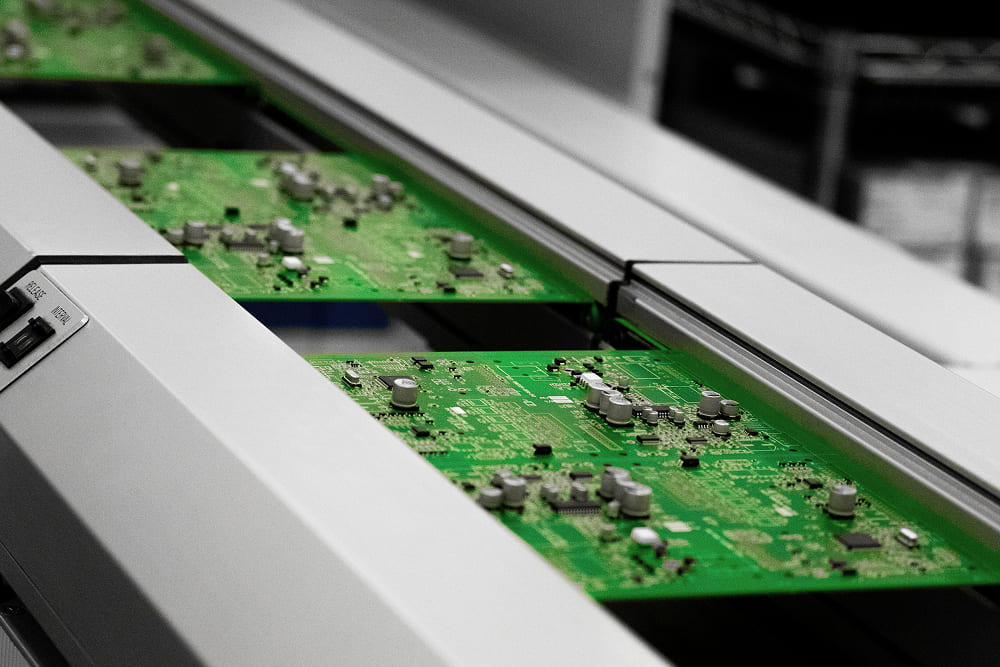
What Is In-Circuit Testing?
Flying Probe Testing
uses a small number of moveable probes that travel across the board to contact test points sequentially. It requires no dedicated fixture, making it a practical option for low-volume programs, prototype builds, or assemblies where fixturing is not cost-effective. For flying probe requirements, VR Industries partners with qualified third-party test houses, managing the process on behalf of our customers as part of our overall test strategy.
Ask an Expert
How VR Industries Applies ICT Testing
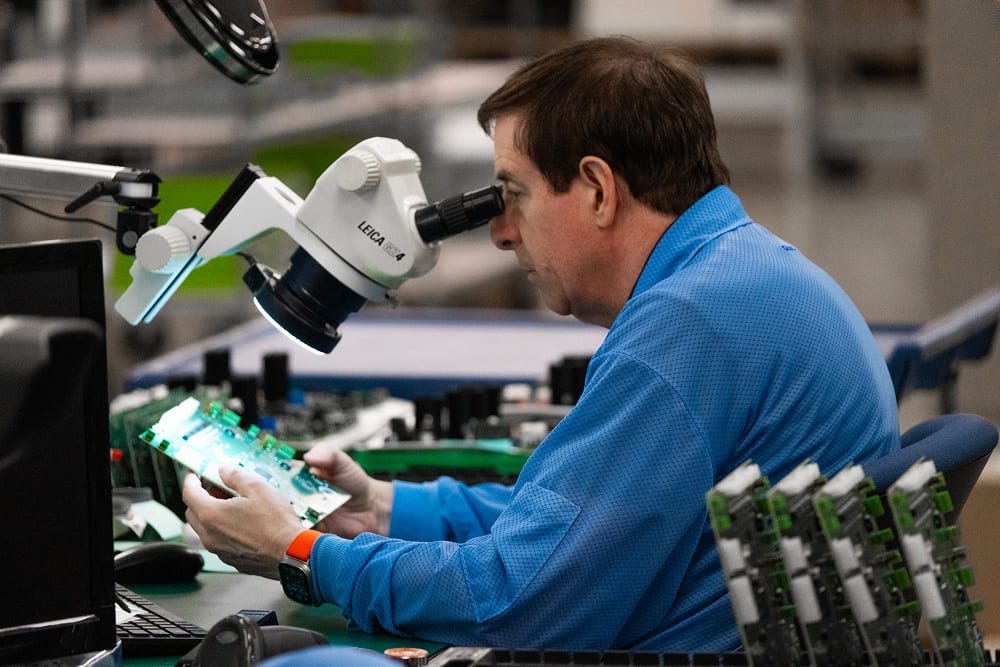
Our team works with customers to determine the appropriate test strategy for each program. When in-circuit test is the right fit, we integrate it as part of a structured inspection and test flow that also includes automated optical inspection (AOI) and, where required, functional test and burn-in services. This layered approach ensures that defects are caught at the earliest – and least costly – stage of production.
Our quality system supports thorough documentation and traceability throughout the ICT process, aligning with the requirements of our ISO 9001 and ISO 13485 certified quality management systems. For defense programs, our ITAR-registered manufacturing environment ensures appropriate controls are maintained throughout.
Key capabilities within our PCB testing services include:
- Bed-of-nails fixture development in coordination with customers and suppliers
- Flying probe testing available through qualified partner test houses for low-volume and fixtureless programs
- In-circuit test integration with AOI and functional testing for complete defect coverage
- Component-level fault isolation for fast, accurate root cause identification
- Test documentation and traceability records supporting ISO and regulatory requirements
PCB In-Circuit Test as Part of a Broader Quality System
A robust test strategy is never a single method in isolation. At VR Industries, in-circuit testing works alongside our other quality systems to deliver the kind of reliability our customers require in critical applications. Our quality infrastructure includes automated optical inspection, high-resolution x-ray inspection for BGA and hidden joint verification, functional testing, and burn-in services – each applied at the appropriate stage of production.
This integrated approach is supported by our IPC-A-610-certified operators, our Zero Defect quality program, and complete component traceability from incoming inspection through final delivery. Whether your assembly is destined for a patient monitoring device, a defense subsystem, or an industrial control application, our test capabilities are designed to validate quality at every step.
Additional elements of our quality system that complement ICT include:
- Automated optical inspection for post-paste, post-placement, and post-reflow verification
- High-resolution x-ray inspection for BGAs and solder joint analysis
- Functional test and burn-in to validate performance under operating conditions
A Test Strategy Built Around Your Program
VRI understands that no two programs are identical. Our program managers and engineering team work closely with customers to define the test approach that best fits the complexity, volume, and regulatory requirements of each product. When in-circuit testing is part of that strategy, whether bed-of-nails or flying probe, we treat it as one element of a broader commitment to delivering assemblies that meet your specifications the first time and every time.
To learn more about how our PCB testing services and quality systems support your manufacturing program, explore our [Quality Systems page] or connect with a member of our team.
